
Written By: Dr. Karan Pal Singh Chahal
Consultant - Cardiology
Sohana Hospital, Mohali.
Experience: 12+ Years
Published: 21 October 2024
Last Updated: 21 October 2024
Heart disease symptoms are common in people of all ages in this era, thanks to the ultra-modern lifestyle they follow. Undoubtedly, there is an unexpected spike in the number of cases that require angioplasty on an urgent basis. Having some information about the angioplasty procedure and its involved risks can help make a wise decision.
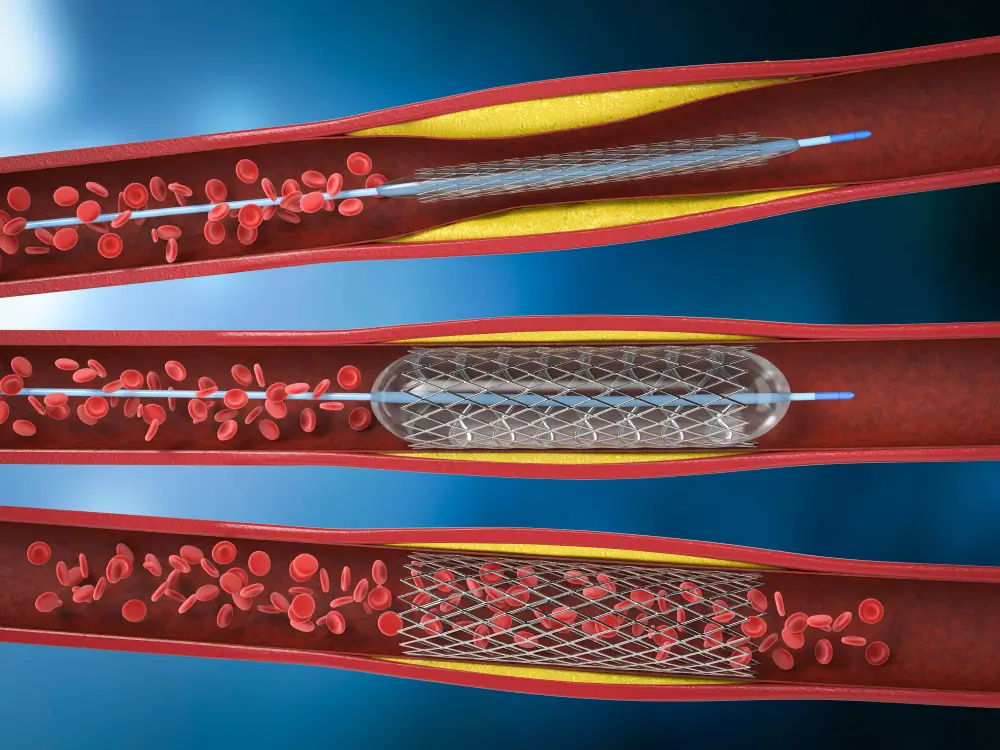
Also known as balloon angioplasty, this is a procedure that helps to release the obstructed blood flow by opening up the arteries. It is a minimally invasive procedure that clears any clogs within the blood vessels responsible for causing blockage. The catheter helps to open up the arteries and improve the blood flow within them by widening the blood vessels.
Done with the help of a stent placement, the angioplasty procedure aids in widening the narrowed-down blood vessels. The medicinal coating on the stent helps keep the arteries wide open. In emergency cases like heart attack, a cardiologist in Chandigarh suggests immediate angioplasty otherwise it may be planned beforehand.
People with a history of heart attack or a coronary heart disease ought to go for coronary angioplasty. The procedure relieves plaque accumulation that causes blocking and narrowing of blood vessels to give a better blood flow. The angioplasty helps the heart receive this improved blood flow and beat rhythmically. Angioplasty involves the placement of stents that treat atherosclerosis which affects the blood pumping of the heart. Below are a few reasons why a cardiology doctor near me will suggest angioplasty but there might be more reasons for undergoing the same.
Chest pain due to artery blockage
Medications don’t improve heart health
To restore the blood flow to the heart and manage a heart attack.
A few cases do not require the patient to undergo angioplasty as the blockage in the arteries is not much. However, the doctor can evaluate the condition of a patient before determining if he or she needs to undergo an angioplasty procedure or an open-heart surgery.
Although angioplasty may not cause major issues, every surgery comes with some risks involved with it, which are manageable. In some cases, the patient for cardiology in Mohali requires a CABG after the angioplasty to manage the complications.
Excess bleeding or hospital-acquired infection may occur at the catheter implantation site.
The blood vessel may narrow down again if there was no use of a stent.
Abnormal heartbeat while the angioplasty is underway which may require management with medication.
Formation of blood clots within the stent that may have consequences like a heart attack.
A fragment of plaque may break to reach the brain and cause stroke by blocking the blood flow.
There are numerous unknown benefits of undergoing angioplasty and knowing them may eliminate one’s fear of undergoing the same.
Angioplasty helps regulate blood flow towards the heart as it relieves the blood vessel blockage.
Angioplasty shows great results when a heart attack occurs as it is a better alternative than less effective medications.
It relieves the symptoms of heart ailments and allows the patient to perform routine activities without any discomfort.
An angioplasty procedure at a nearby heart hospital decreases the risk of another heart attack and increases the lifespan.
As one of the most common treatment procedures, angioplasty is definitely safe. This minimally invasive procedure involves a small incision and makes it easy for the surgeon to perform the surgery.
Doctors usually consider the overall health of the patient, the heart condition they suffer from and its severity before suggesting an angioplasty. Determination of these factors helps the doctor to decide whether the surgery is safe for the patient or involves any risk.
Doctors usually ask patients of angioplasty for a hospital stay of at least 24 hours after the procedure to watch for any complications. The doctor will tell the patient about the medicines he or she must take regularly. The patients must discuss with the doctor the tasks he or she can perform during the recovery phase from angioplasty. After getting discharged from the hospital, doctors suggest avoiding activities like driving for 1-2 days due to the effects of anesthesia used during the procedure.
Once at home, the patient must drink an adequate amount of water and other fluids and avoid exertion for a minimum of 24 hours. The doctors advise blood thinners to the patients after angioplasty which one should not miss. It is better to follow the instructions from the heart specialist so that it aids in quicker recovery after the surgery and without causing any complications.
Sohana Hospital is a heart specialist hospital in Mohali with a well-equipped and ultra-modern Catheterization lab that allows for effortless angioplasty surgeries. With the best technicians, our experienced doctors perform the procedure while ensuring comprehensive care for the patients at every step.
Can a person live a normal life after a stent?
Yes, most people return to normal life after returning to a normal, active, and fulfilling life after getting a heart stent. Recovery after a stent looks like going home within 1 to 2 days, medication adherence, long term habits, and regular followups, making sure you have the full support after a major heart surgery.
How can Sohana hospital help with angioplasty?
Sohana hospital has a wide range of treatment for all kinds of heart diseases including angioplasty. Their expert set of doctors and medical experts have all the treatment for heart problems that can be fixed with the help of advanced treatment.
How painful is getting a stent?
Stents are usually not painful as it is a minimally invasive procedure and is generally not painful, as you are given a local anesthetic and relaxation medicine. A Numbing injection: Insertion site, contrast dye, balloon inflation.
What is the success rate of stents?
Coronary stent placement has a high success rate because of its efficiency and excellence with the process. Key Success and Outcome Metrics include Procedural/Technical Success, In-Hospital Mortality, and Symptom Relief.
How long is bed rest after angioplasty?
Most patients stay in the hospital for 1 to 2 days (24 to 48 hours) after a planned angioplasty. You can discuss your case with a nearby heart hospital and understand what's the whole procedure for your heart stent.
Medically Reviewed By:
Dr. Harpreet Singh Gilhotra
Director Cardiology
Sohana Hospital, Mohali.
Credentials of the Author:
-MD Internal Medicine
-DM Cardiology
-25+ Years of Clinical Experience
-Specialist in Cardiac Diagnostics, Treatment & Prevention

Cardiology & Cardiac Surgery




 SOHANA HOSPITAL